
Fruit tree monitoring
Our crop monitoring tool provides real-time data and customized recommendations to help you manage the growth and health of fruit trees, optimize crop yields, and lower input costs such as fertilizers.
Benefits of our approach
- Our monitoring tool is designed to provide clear and easy-to-follow advice on managing tree health and optimizing crop production.
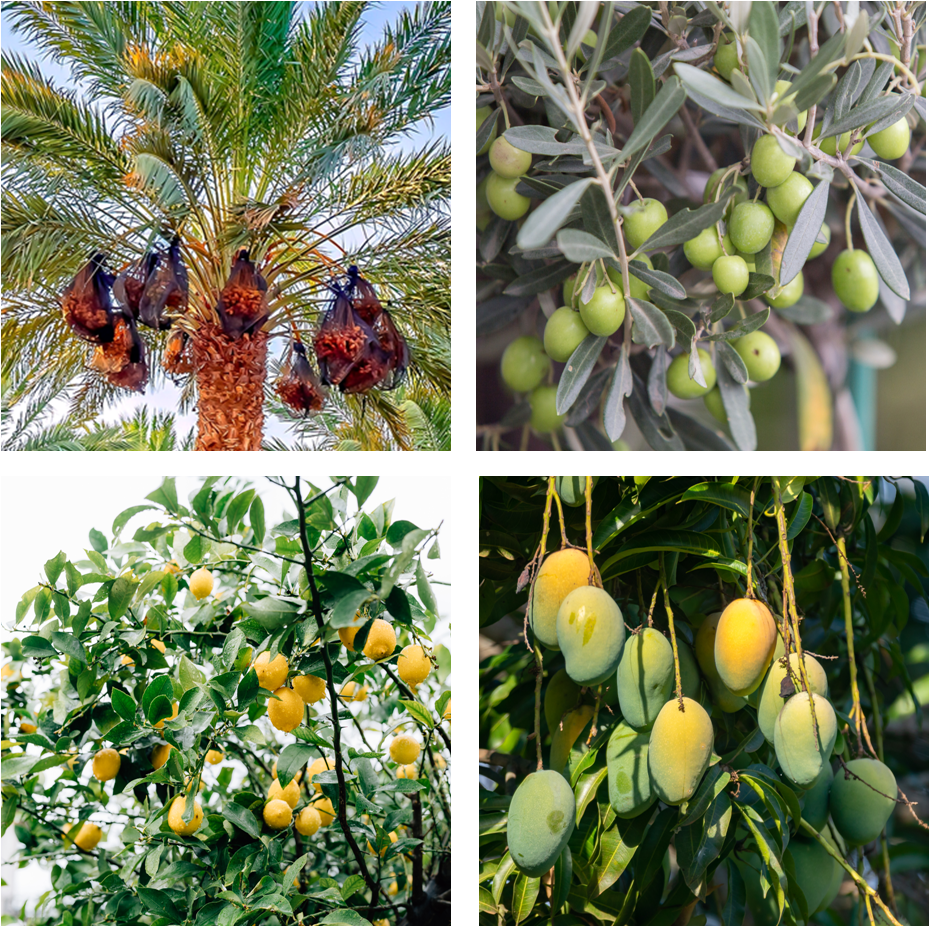
- Customized advice for dates, olives, citrus, mangoes, pomegranate, figs and other fruit trees
- Monitoring of tree health, growth and stress
- Automated notification of irrigation, fertilization and harvest schedules
- Reduction in fertilization costs
- Pest and disease detection
- Interactive dashboard for easy visualization of data
Farm performance dashboard
Our performance dashboard gives you critical information to help you optimize the financial performance and operational efficiency of your farm:
- Tree health surveillance based on 20+ indices such as NDVI (Tree health), NDMI (moisture content) and EVI (vegetation greenness)
- Irrigation efficiency index
- Automated alerts for disease, stress or nutrient deficiency (7-14 days ahead of symptoms)
- Tree yield forecast by cultivar
- Performance benchmark against regional farm average

Tree yield forecast
- By analyzing leaf density and other indicators, our crop monitoring tool is able to forecast the expected crop yield per tree. Our AI models can distinguish between different date cultivars, giving you a more precise harvest estimate of expected harvest. This information helps you optimize your crop production in several ways:
- Track tree health and crop growth to detect anomalies
- Take corrective action to address sign of stress and pests
- Determine optimal harvest time
Health and stress monitoring
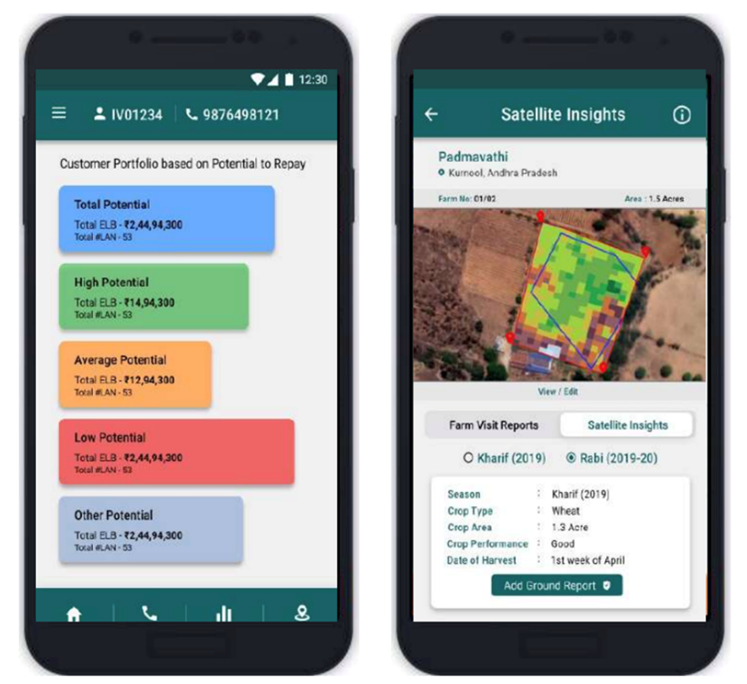
- We provide individual tree health scoring for date palms and other fruit trees by analyzing data collected from satellites. Automated alerts notify you of health or stress issues for specific trees that require direct attention. We collect a range of data from tree canopies and other sources:
- NDVI (tree health), NDMI (moisture content) and EVI (vegetation greenness)
- Canopy density
- Soil moisture levels
- Water stress
- Pest and disease hotspots